
Communication Under Pressure
Why Does Communication Break Down Under Pressure?
You’ve probably noticed this already.
When pressure increases - at work, at home, in teams, in families - communication doesn’t improve.
It gets worse.
Tension rises.
Emotions run high.
And suddenly people stop listening and communication shuts down completely
Why?
It’s because, under pressure, we slip into roles - often without realising it - that make the situation worse not better.
The Drama Triangle: What’s Really Happening in Heated Moments
When communication breaks down under pressure, we find ourselves inside the Drama Triangle.
Stress pushes us into this familiar unconscious patterns.
There are three roles in this triangle. Most of us play all three at different times.
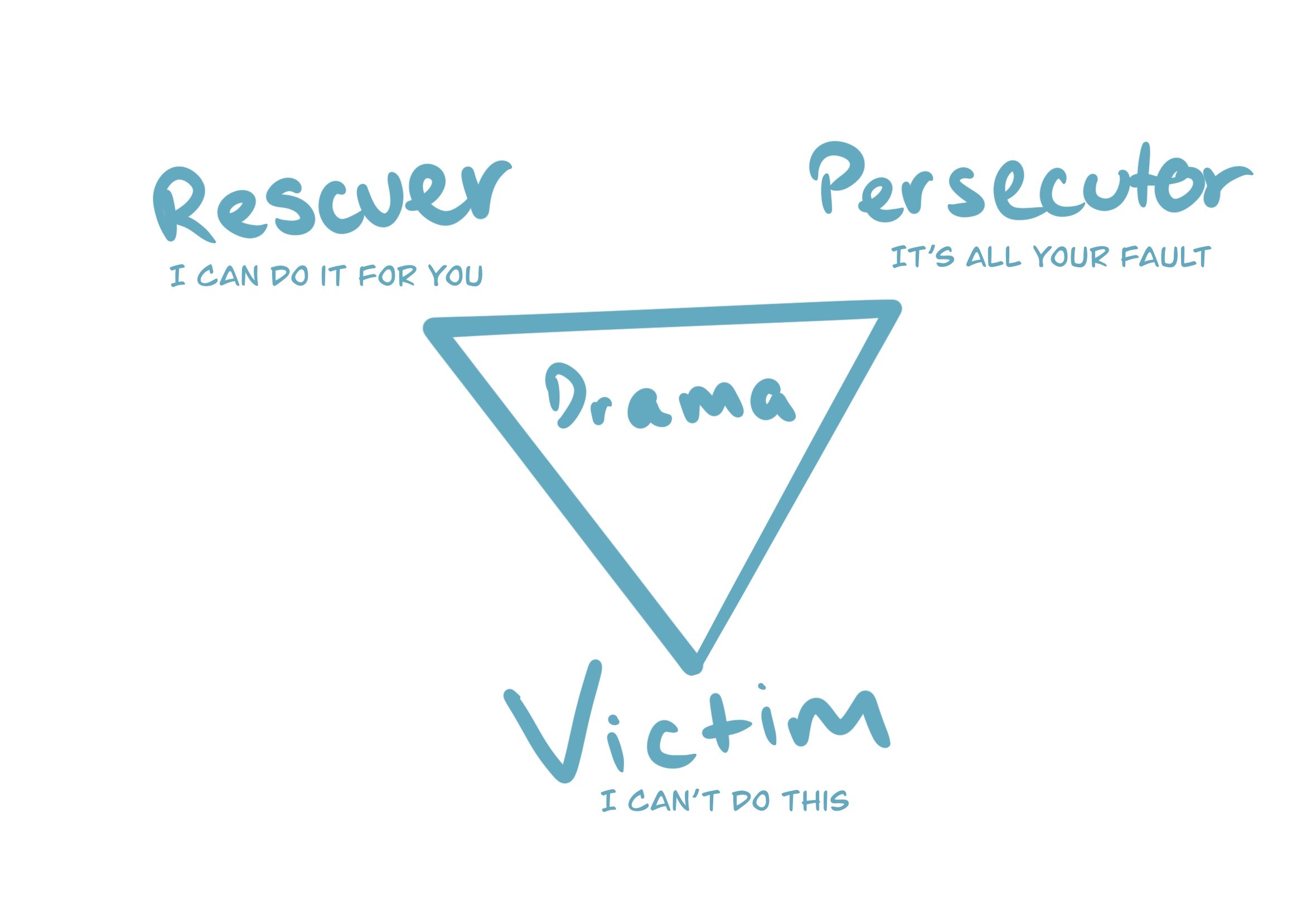
The Victim
This is the role that feels powerless.
They say:
“This is happening to me.”
“I don’t have a choice.”
“I can’t do this on my own”
They are helpless, withdrawn, or discounting.
It’s overwhelm and loss of control.
The Persecutor
This is the role of control and blame.
They say:
“This is your fault.”
“Why can’t you just…”
“You can’t do anything right”
They are critical, judgemental or aggressive.
Bellitelling not guiding.
The Rescuer
This one’s sneaky because it looks helpful.
They say:
“I’ll fix this.”
“Let me handle it.”
“I can help.”
They remove responsibility from the other person, undermining the victim’s ability and over-promising and self-sacrificing.
Saving not supportive.
Why These Roles Keep Conversations Stuck
Under pressure, we move between them - sometimes in the same conversation.
Someone might start as a rescuer, get frustrated, flip into a persecutor, then feel misunderstood and drop into victim mode.
Round and round it goes.
This is why conversations under stress can feel like they’re going in circles. Or triangles.
And to be clear - this isn’t about labelling yourself, your partner, your colleague, or your boss.
This is about noticing:
What role am I playing right now?
Because the moment you see the pattern, you can step out of it.
How to Step Out of it?
You don’t jump out of the triangle by fixing other people.
You jump out by changing your role.
And this is where the Empowerment Triangle comes in.
Each role in the Drama Triangle has a more useful, grounded alternative in the Empowerment triangle.
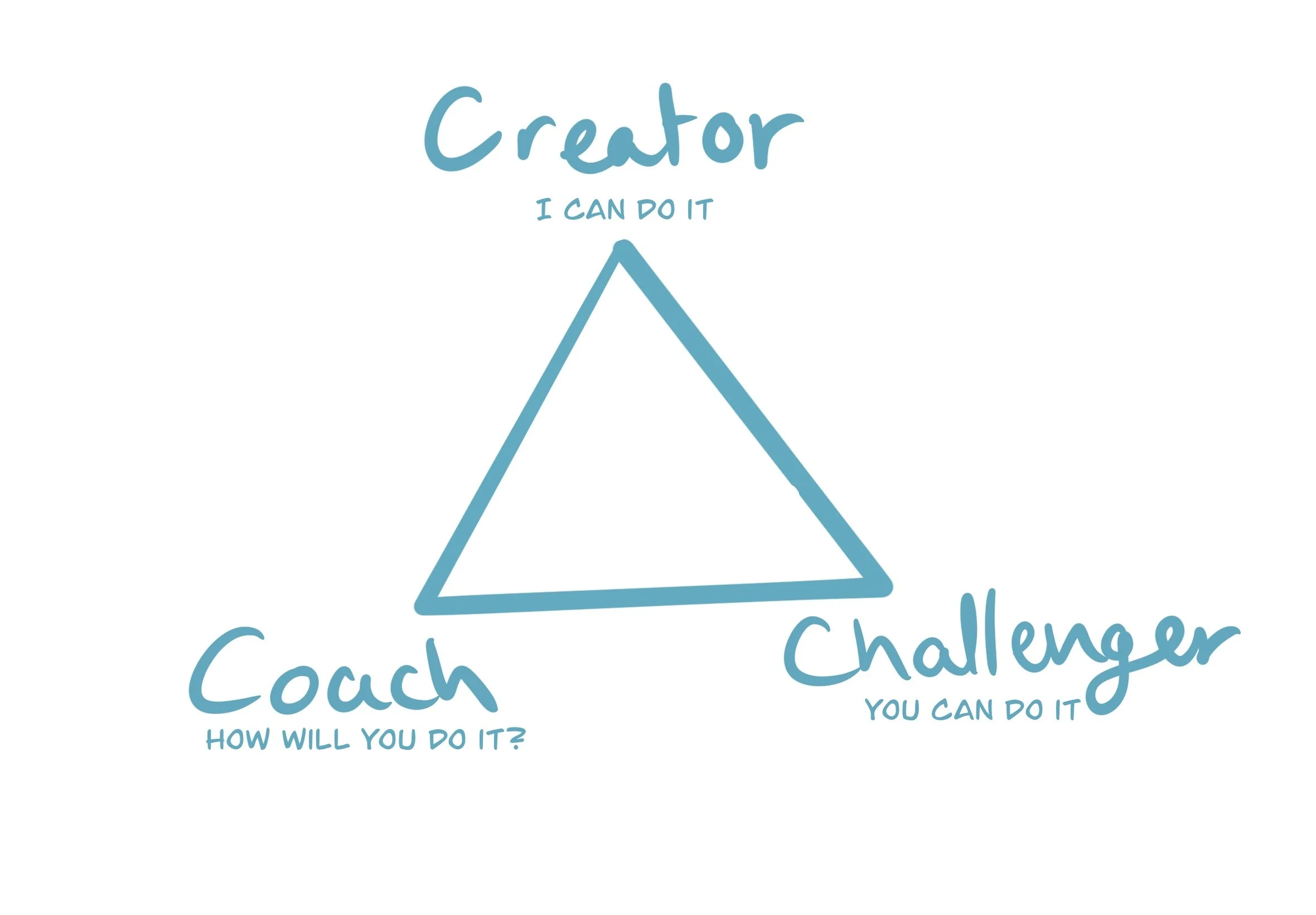
Victim → Creator
Taking back control and agency.
Instead of: “This is happening to me.”
The creator asks:
“What’s actually is in my control?”
You’re not pretending everything is fine, you’re recognising that even under pressure, you still have choices.
Persecutor → Challenger
Instead of blaming or criticising, They challenge helplessness.
The tone shifts from:
“This is your fault.”
To:
“I think you’re more capable than this — what’s your next step?”
It’s firm without being attacking. Clear without being cruel.
Rescuer → Coach
Instead of saving people, the coach supports them to step up.
The coach says:
“What do you think?”
“What would help right now?”
“How do you want to handle this?”
It keeps responsibility where it belongs and stops resentment building later.
Why This Changes Communication Under Pressure
When you shift roles, the conversation shifts with you.
You stop feeding the pattern that escalates tension.
You stop spinning in the same triangle.
You bring focus back to the actual problem at hand.
And the best part?
You don’t need the other person to know any of this for it to work.
Awareness alone changes how the next moment unfolds.
A Simple Reflection
If this idea resonates, don’t overthink it.
Just notice:
Which role do I default to under stress?
How can i shift out of this role?
That awareness, on its own, can completely change how your next conversation goes.
